1 item has been added to your cart.

Generalized Linear Models: An Applied Approach |
||||||||||||||||||||||||||||||||||||
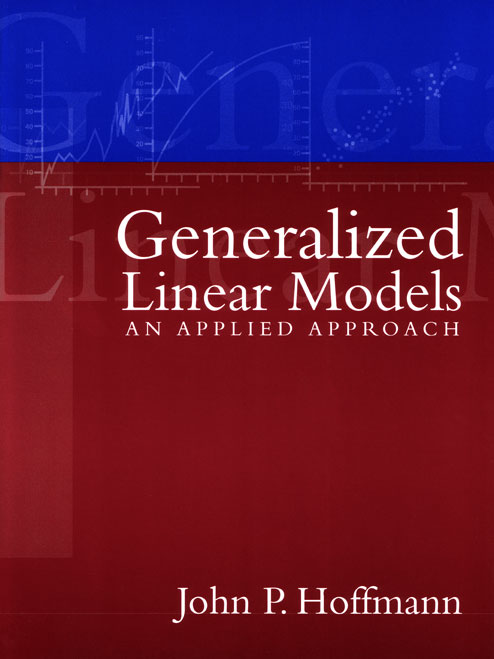 Click to enlarge See the back cover |

As an Amazon Associate, StataCorp earns a small referral credit from
qualifying purchases made from affiliate links on our site.
eBook not available for this title
eBook not available for this title |
|
||||||||||||||||||||||||||||||||||
Comment from the Stata technical groupGeneralized Linear Models: An Applied Approach, by John Hoffmann, presents the reader with an applied tour through the world of generalized linear models. Using real-world datasets, the author discusses a wide class of models, organizing the material according to what is to be assumed about the dependent variable, whether it be continuous, discrete, categorical, ordered, count, or time to failure. As such, this book is ideal for researchers wishing to apply these models without having to endure the detailed discussions of statistical theory or computational algorithms usually associated with GLIMs. The author focuses instead on the statistical reasoning behind the different models and in the interpretation of computer output, which for the most part is obtained using Stata. After a brief review of the simplest of GLIMs, the linear regression model, and a review of GLIM terminology, the text moves on to covering the various other models, including logistic/probit, ordered response, multinomial logit, count data, and survival or time to failure. A final chapter discussing advanced issues, such as sample selection and endogeneity, is also included. |
||||||||||||||||||||||||||||||||||||
Table of contentsView table of contents >> |
||||||||||||||||||||||||||||||||||||


